High humidity
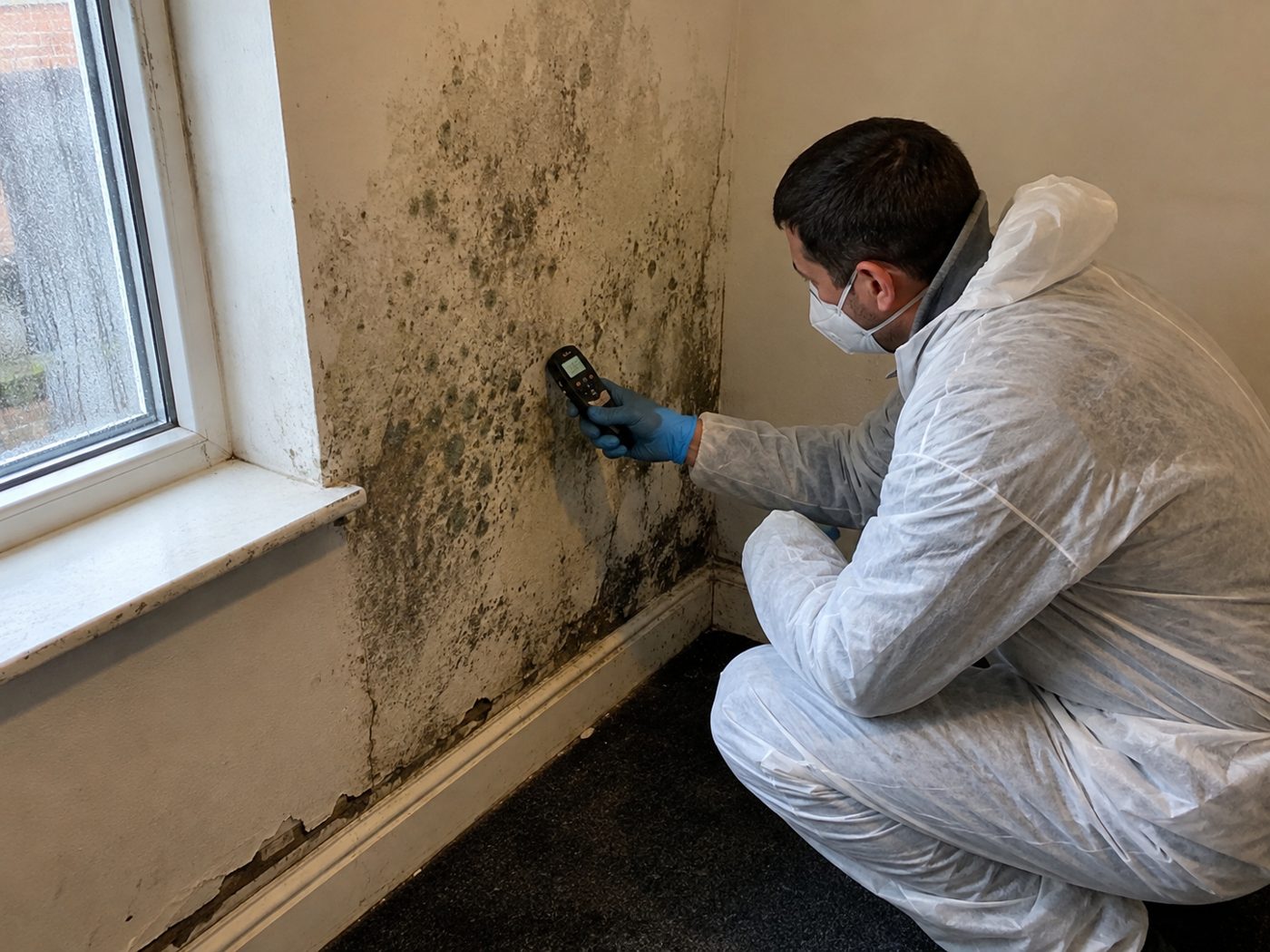
What's happening?
Persistent damp air, musty smells and clammy surfaces, often above 65% relative humidity indoors.
Possible causes
- Insufficient background ventilation
- Moisture generation from cooking, washing and drying
- Subfloor or basement moisture entering the living space
How do you tell it apart?
High humidity rarely has a single obvious explanation, so the useful first step is to describe the pattern rather than name the cause. Note where it appears, how high it reaches, whether it changes with the weather or the season, whether the affected room produces a lot of moisture, and whether anything has recently been repaired, plastered or decorated nearby. Photographs of the inside and the matching outside of the same wall are worth more to a surveyor than any single meter reading.
Mistakes that cost money
The common mistake with high humidity is to treat the surface and leave the source in place, which means the same problem returns a season or two later. Before agreeing to remedial work, ask what the contractor believes the moisture source is, what evidence supports that, and what would have to be true for an alternative explanation to be ruled out. Ventilation and property preservation specialist who can measure humidity and airflow.
What type of specialist may be required?
Ventilation and property preservation specialist who can measure humidity and airflow.
What should you do next?
- 1.Log humidity readings over a week
- 2.List any ventilation you already have
- 3.Ask for airflow measurements as part of the assessment