Condensation
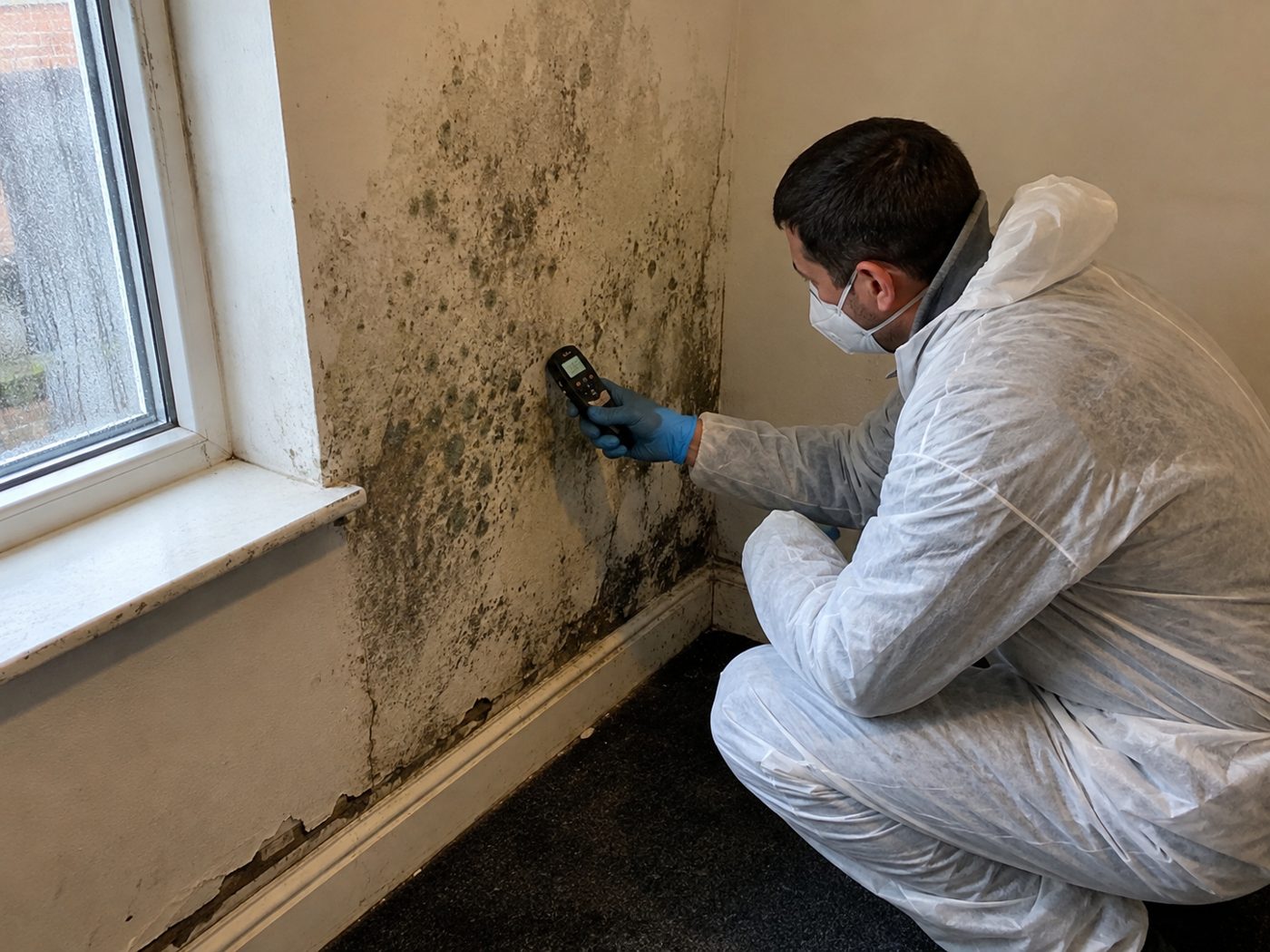
What's happening?
Water forming on windows, cold walls and in corners, usually worst in winter mornings and in bedrooms, kitchens and bathrooms.
Possible causes
- High indoor humidity with low ventilation
- Cold surfaces and poor insulation
- Blocked, undersized or unused extract fans
How do you tell it apart?
Condensation is water vapour returning to liquid on a surface cold enough to reach dew point. The pattern is seasonal and behavioural: worse in winter, worse first thing in the morning, worse in rooms where washing is dried indoors or where showers and cooking produce moisture, and often concentrated on glazing, lintels, corners and behind furniture. Unlike a leak or rainwater ingress, it affects surfaces rather than the depth of the wall.
Mistakes that cost money
It is easy to blame occupants and stop there. In practice the balance of moisture production, ventilation, insulation and heating all matter, and cold bridging at lintels, jambs and junctions frequently explains why mould keeps returning in exactly the same place. A proper condensation and ventilation assessment measures humidity and surface temperatures over time rather than making assumptions from one visit, and should consider whether the existing extract ventilation actually performs to the rates it is supposed to.
What type of specialist may be required?
Ventilation specialist, often supplying positive input ventilation or continuous extract units.
What should you do next?
- 1.Measure humidity with a cheap hygrometer if you can
- 2.Note which rooms are affected
- 3.Request a ventilation assessment rather than just fan replacement