Black mould
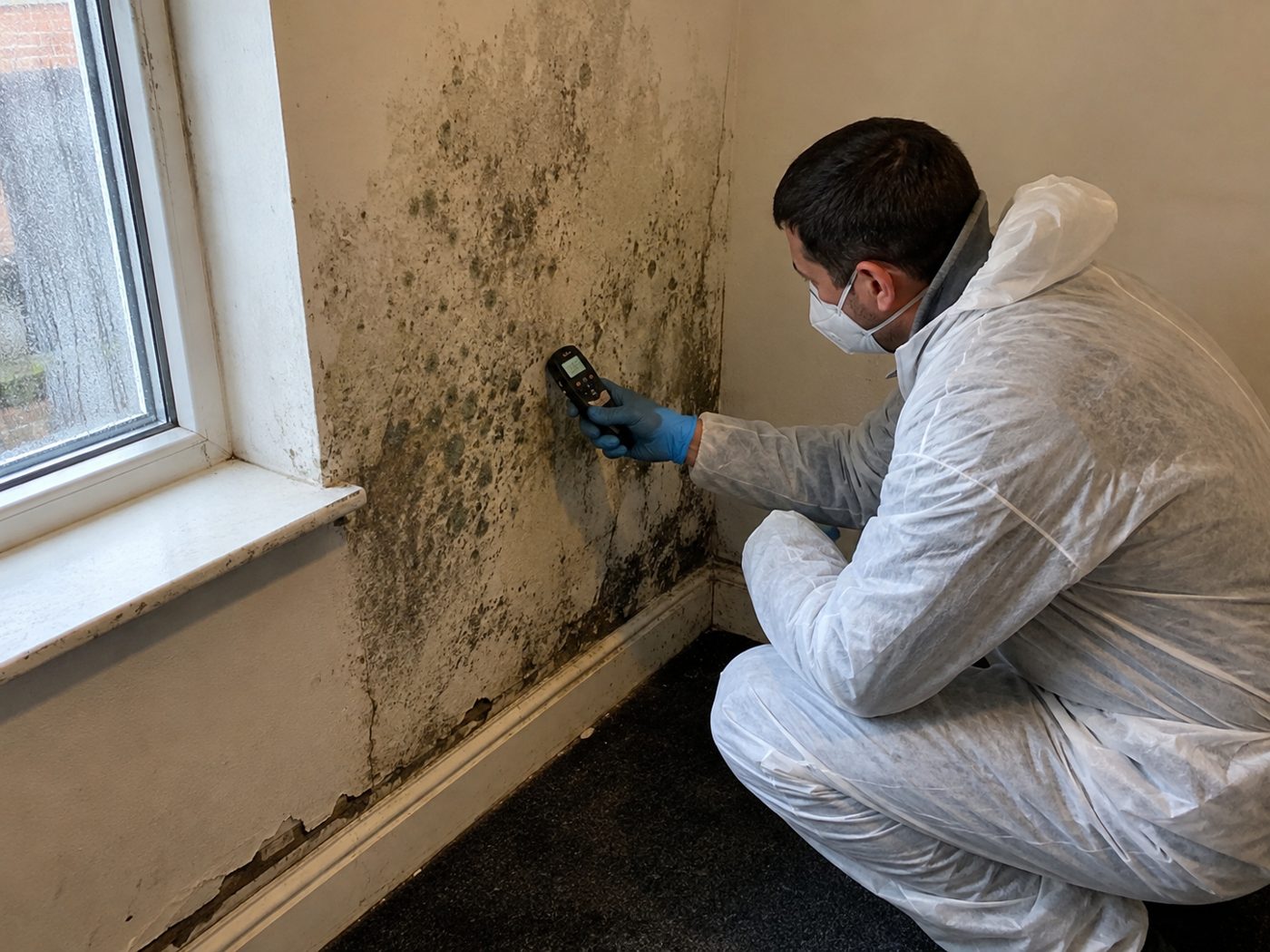
What's happening?
Black spotting on walls, ceilings, window reveals, behind furniture and on fabrics, frequently returning after cleaning.
Possible causes
- Surface condensation on cold walls and thermal bridges
- Inadequate ventilation and extract fans
- Overcrowding and drying washing indoors
- Underlying damp
How do you tell it apart?
Black mould needs moisture, a surface it can colonise and time. It usually appears on the coldest surfaces first: external corners, behind wardrobes and beds pushed against outside walls, around window reveals, and in bathrooms and kitchens. If it is worst in winter, worst in unheated rooms and accompanied by streaming windows, elevated humidity is the obvious area to investigate. Mould over a discrete patch, in a warm room, or with staining spreading outwards suggests a specific water source instead.
Mistakes that cost money
Wiping mould away with bleach treats the appearance, not the cause, and it will return while the moisture remains. Sealing up trickle vents, blocking airbricks or removing an extractor fan makes things worse. The useful sequence is to reduce moisture at source, improve extraction where moisture is produced, warm the cold surfaces where possible, then remediate the mould properly. Where a household member has a respiratory condition, or where the affected area is extensive, it is worth having the remediation carried out by a specialist.
What type of specialist may be required?
Mould remediation and ventilation specialist. Where mould follows damp, a damp surveyor should establish the cause first.
What should you do next?
- 1.Record the rooms affected and when it is worst
- 2.Note whether extract fans work
- 3.Ask specialists to explain the moisture source, not just the cleaning